Whose Sound Is This Anyway? Afrobeats and the Slow Fade of the Indigenous Creative Mind
There's an old saying that a river that forgets its source will eventually run dry. I think about it every time a new Afrobeats release lands with that unmistakable log-drum bounce that didn't come from Lagos, didn't come from anywhere on this side of the continent's musical map, and everyone streams it anyway, because it's catchy, and because most of us have stopped asking where catchy came from. Nobody set out to lose the plot. That's rarely how these things happen. It's usually one convenient borrowing at a time, until the borrowing quietly becomes the whole blueprint.
A genre of old vibes
We talk about Afrobeats sometimes as though it invented itself the moment Spotify built it a playlist. It didn't. Strip back the layers, and you find an entire lineage. Fela Anikulapo-Kuti coined "Afrobeat", singular, around 1969 after a conversation with a promoter in Accra, fusing highlife, jazz, funk and the driving polyrhythms of West African percussion into something explicitly political, explicitly confrontational.
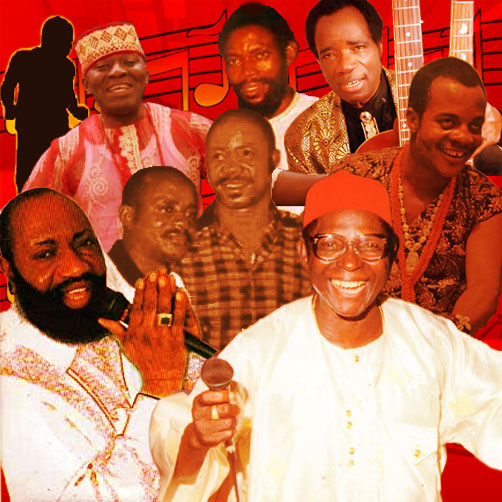
Before Fela, there was highlife itself, carried into Nigeria by figures like Bobby Benson, Victor Olaiya, and later given its own Igbo inflexion by Oliver De Coque and the Oriental Brothers. Alongside that ran Juju, with King Sunny Ade and I.K. Dairo fusing Yoruba talking drums with electric guitar, and then came Fuji, which has perhaps the most remarkable origin story of the lot: it grew out of "were" music, the pre-dawn Ramadan chants performed by young men walking through Muslim neighbourhoods in Ibadan and Lagos banging pots and pans to wake the faithful for suhur, before Sikiru Ayinde Barrister formalised it into a genre in the 1960s and named it, almost as a joke, after a poster of Mount Fuji he saw in an airport. Apala, rooted in Ijebu Yoruba tradition and popularised by Haruna Ishola and Ayinla Omowura, carried its own dirge-like emotional register. Waka gave Queen Salawa Abeni three uncontested decades as its reigning voice.
That is not a shallow well. That is a century of distinct, technically sophisticated, regionally specific musical traditions, each with its own rhythmic language, its own instrumentation, its own social function, sitting in this country's inheritance. What we now call Afrobeats, plural, evolved out of that foundation in the early 2000s as Nigerian and Ghanaian producers layered in dancehall, hip-hop and R&B, and the blend is precisely what made the sound powerful enough to travel. Borrowing was never the sin. Every genre that has ever mattered borrowed from somewhere. The question is whether the borrowing still runs in every direction, or whether it has narrowed into a one-way pipeline.
The Amapiano crutch
Here is the uncomfortable observation a growing number of critics inside the industry have started making quietly, the way you point out a friend's drinking problem before it becomes everyone's problem: since the "Afropiano" wave that carried Asake, Lojay, Omah Lay and Victony into the mainstream after COVID, there have not been many genuinely new directions in the sound. The log drum, the amapiano-derived bassline, the shaker patterns lifted almost wholesale from South African production. They're everywhere, on nearly every playlist claiming to represent "the new Afrobeats."
And that raises the real question critics are now asking out loud: why isn't the genre looking inward, at its own two-decade streaming-era catalogue and the hundred-plus years of West African popular music underneath it, instead of continuing to lean on an entirely different country's innovation cycle for its next sonic idea? We have Fuji's intricate polyrhythms sitting largely unmined by mainstream pop production. We have apala's emotional minor-key phrasing. We have an entire highlife guitar tradition that shaped Congolese soukous and was shaping the world before "Afrobeats" was a marketing term. And a meaningful share of what's currently charting sounds imported wholesale from a genre this country didn't build, rather than reaching backwards into one it did.
To be fair to the artists: some of this is just how pop music works everywhere. Trends move fast, deadlines move faster, and a proven bassline is a proven bassline. This isn't a call to gatekeep influence; genres that stop absorbing new sound calcify into museum pieces, and nobody serious is asking for that. But there's a real difference between influence and dependency, and a growing number of people close to the industry think that ratio has quietly tipped.
The stakes are bigger than nostalgia
This matters beyond pride. Music is one of the few Nigerian exports where we control both the raw material and the finished product; unlike oil, unlike cocoa, we are not shipping out something unprocessed for someone else to refine and profit from. Afrobeats built genuine soft power: Burna Boy selling out stadiums, Tems collecting a Grammy, Rema breaking streaming records. This reshaped how the world hears Black music generally, and it happened because the sound felt, in the words of more than one critic, "earned" rather than manufactured.
That authenticity is the actual asset. If the next generation of hits leans structurally on somebody else's genre rather than our own deeper catalogue, we are not just making a creative choice; we are slowly trading away the one thing that made the export valuable in the first place: the sense that this sound could only have come from here.
My take
I'm not interested in policing what Afrobeats is allowed to sound like. But there is a difference between a genre absorbing the world and a genre quietly outsourcing its own imagination, and right now too much of the mainstream output is doing the latter. Somewhere in Ajegunle, in Kaduna, in Warri, there's a young producer who grew up hearing their grandfather's fuji records or their mother's old apala cassettes, and that ear is worth more to this industry's next decade than one more imported log drum ever will be. The labels and the A&Rs need to go looking for that ear deliberately.
A river doesn't need to stop taking in new water to stay itself. It just needs to remember where its own source is, or one day it reaches the sea carrying nothing that was ever its own.

BJ Barango
BJ Barango is the Head of Station at Montage 99.7 FM in Abuja and the host of The Capital Morning Show. He writes about governance and the issues that influence civic life in Nigeria in his column, The BJ Barango Report.