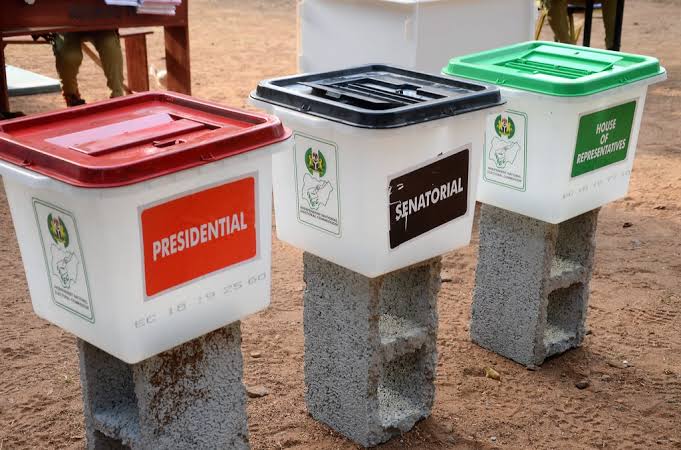
Every election cycle, Nigeria performs the same seasonal miracle: the market woman suddenly matters. The mechanic matters. The unemployed graduate, the pensioner, the trader, the farmer — all of them, suddenly, matter enormously to men who could not previously locate their communities on a map.
This courtship has a name in Nigerian political folklore: the voter as the beautiful bride. Everyone wants her hand. Everyone showers her with attention, food, dance, dialect and promises, right up until the ballots are counted, at which point the beautiful bride tends to discover she has married a stranger who no longer returns her calls.
Nigeria's 2027 campaign season officially opened on August 19, 2026, per INEC's timetable, and with it comes the full theatre — rallies, defections, coalitions, jingles, promises stacked on promises. But let's ask the one question the theatre is designed to distract from: as a voter, what exactly are you voting for?
Know your worth, or lose the marriage
A beautiful bride who doesn't understand her own bargaining power can still walk into a terrible marriage, eyes open, heart full, judgment switched off. The Nigerian voter needs to stop showing up as a fan and start showing up as an employer, because that is functionally what an election is: citizens hiring people to manage collective resources.
Would you hire someone without asking what they've actually built? What they've fixed? What failed on their watch, and what they learned from it? Then why do Nigerians keep hiring presidents and governors on vibes?
Charisma is not a qualification
Nigeria has a weakness for the politician who can command a room, the storyteller, the crowd-pleaser, the one who makes you laugh before he takes your future. But charisma and competence are not the same instrument, and mistaking one for the other has cost this country dearly, repeatedly. Vision matters. Execution matters. The willingness to admit a mistake matters more than either.
Party loyalty is not accountability
"I vote my party, no matter what" sounds like conviction. It is actually a blank check, and politicians know exactly how to cash it. If your vote is guaranteed regardless of performance, why would any party bother performing? Loyalty without scrutiny isn't democracy. It's a subscription service nobody can cancel.
Identity is not a governing plan
Ethnicity, religion, region — these can illuminate questions of representation, but they cannot answer the only question that ultimately matters: what will this person actually do? A politician who shares your tribe and fails you is still, plainly, failing you. A stranger from the other end of the country who delivers is still, plainly, delivering. Democracy is supposed to widen our interests beyond our own reflection, not narrow them.
Nigeria enters this campaign season fresh off major economic reforms — subsidy removal, currency changes — that Reuters notes have pleased investors even as households absorbed brutal cost-of-living pressure. That tension deserves real scrutiny, not slogans in either direction. "Things are expensive, so government has failed" is too simple. So is "government says it's working, so it must be." The responsible voter checks the inflation numbers, the employment figures, the investment data, not the press conference.
MY TAKE!
If a politician hands you cash for your vote, understand exactly what transaction just occurred: you have traded four years of access to public resources — resources that dwarf whatever was in that envelope — for the price of a meal. That is not a good deal. That was never a good deal.
The politicians are already on their way. They will bring promises, charm, and a well-rehearsed case for why their rivals are unfit. Listen, but don't surrender your judgment at the door. The Nigerian voter should become the most demanding employer in the country: ask for the CV, ask for the plan, ask for the cost, ask how success will be measured. And when the campaign ends, and the votes are counted, remember what was promised, because that is precisely when accountability is supposed to begin, not end.
The Nigerian voter really is the beautiful bride. But a beautiful bride who knows her worth doesn't marry the first man who shows up with a slogan.
